Procedures / Breast
BreastAugmentation in Boca Raton with Dr. Charles Riccio
Fuller, balanced breasts planned around your chest wall, your tissue and the result you want to see in the mirror, not a cup size picked from a chart.
Viewer discretion
Clinical photographs of real patients, shared with consent. Contains nudity.
Images stay blurred until you choose to view them.
- Anesthesia
- General
- Surgery time
- About 1 to 2 hours
- Setting
- Outpatient, home the same day
- Desk work
- Often within 1 week
- Exercise
- Gradually from about 6 weeks
- Settled result
- 3 to 6 months
Before & after
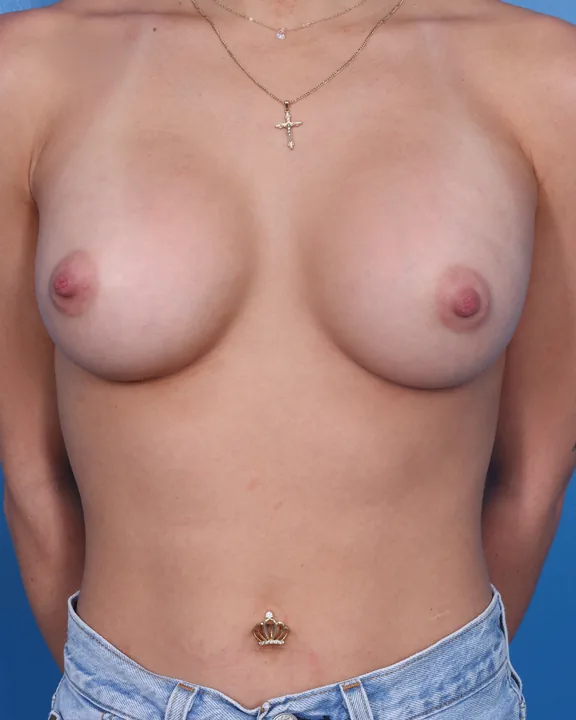
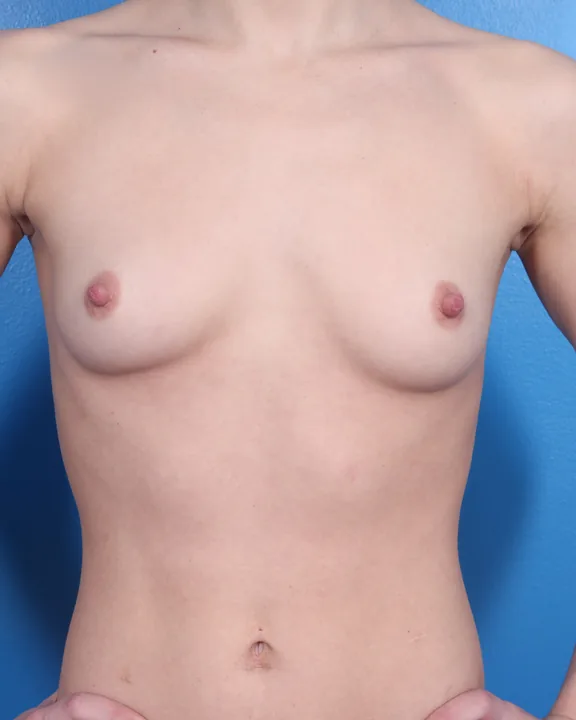
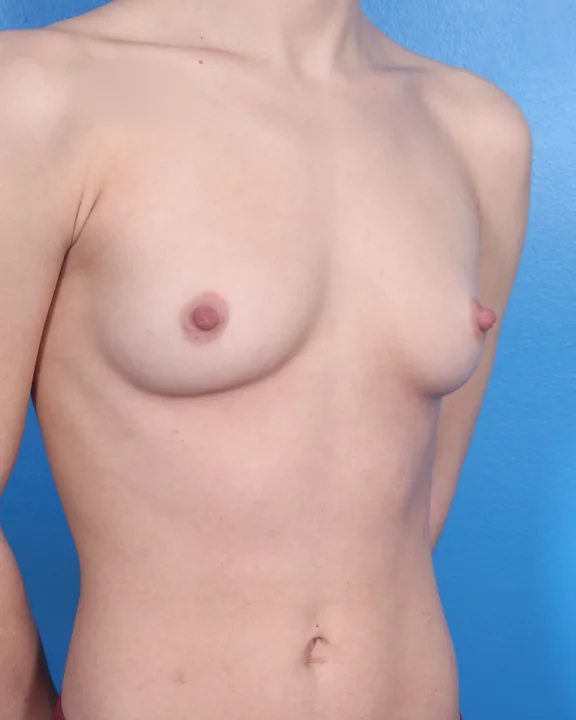
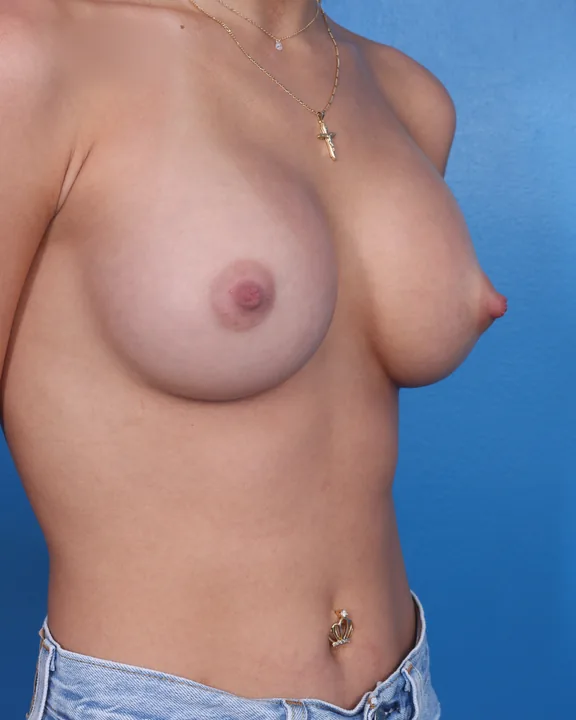
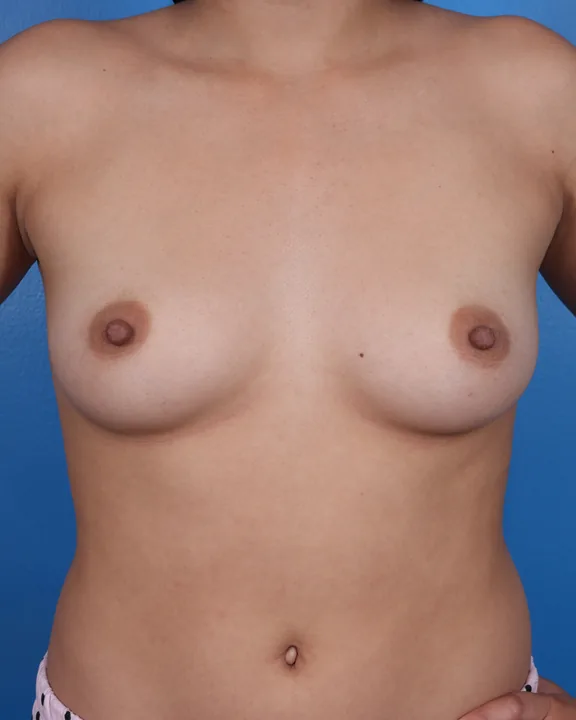
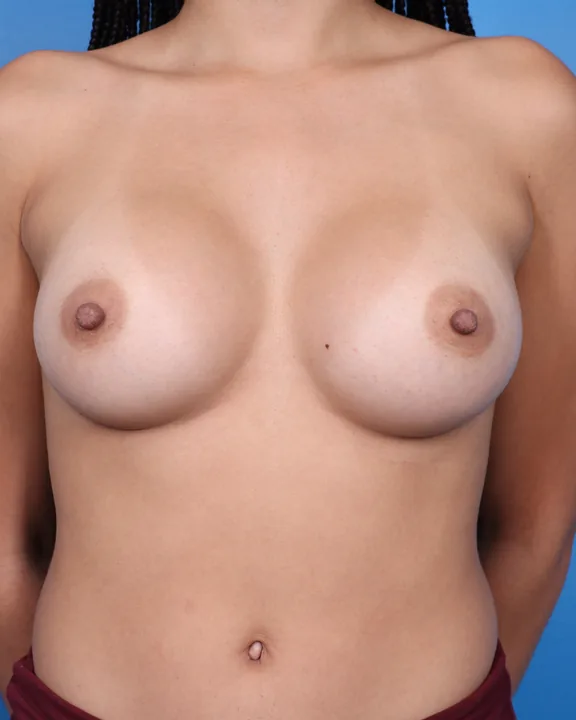
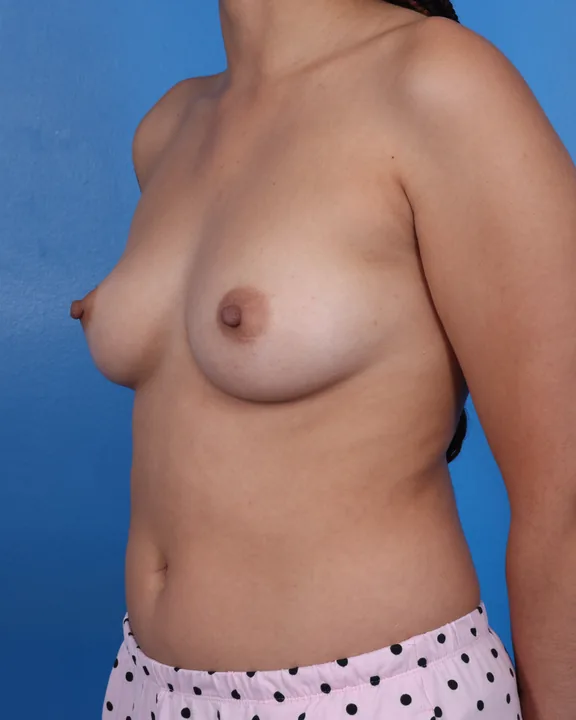
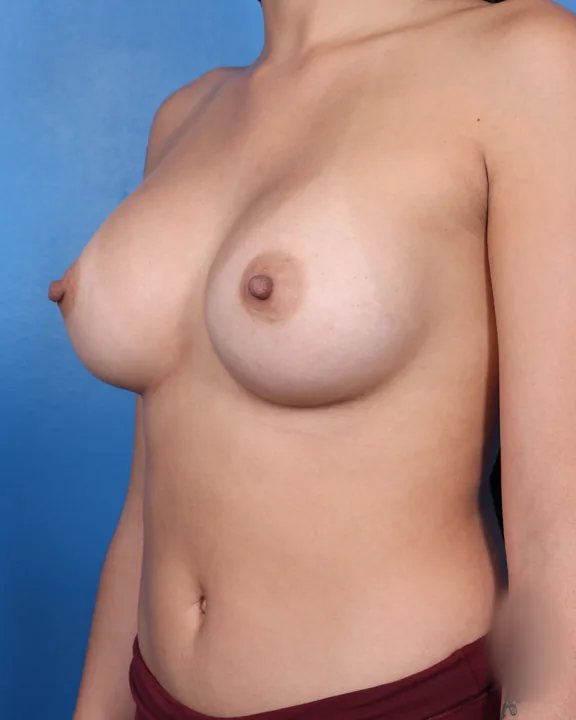
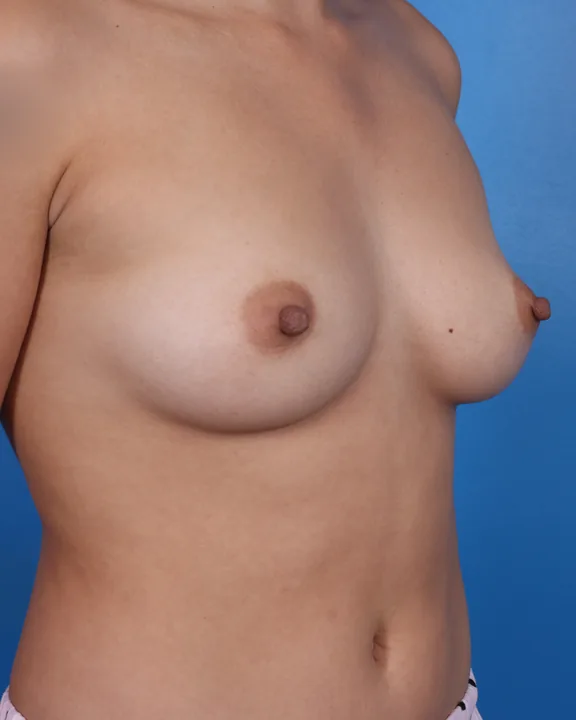
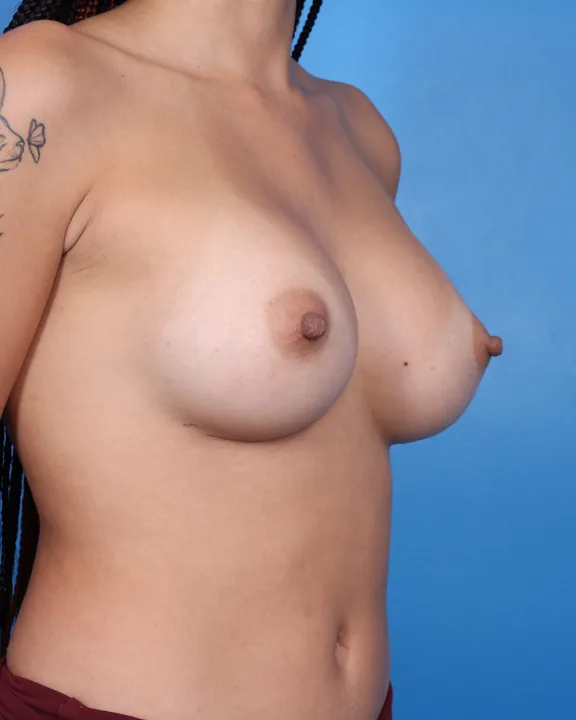
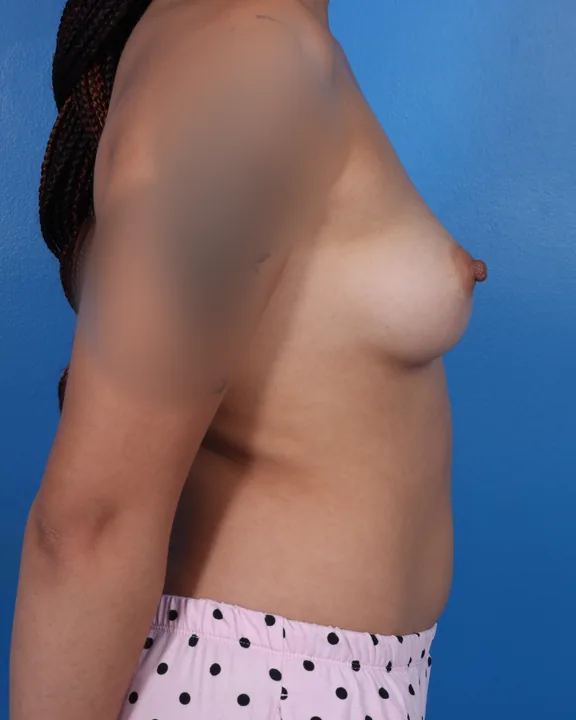
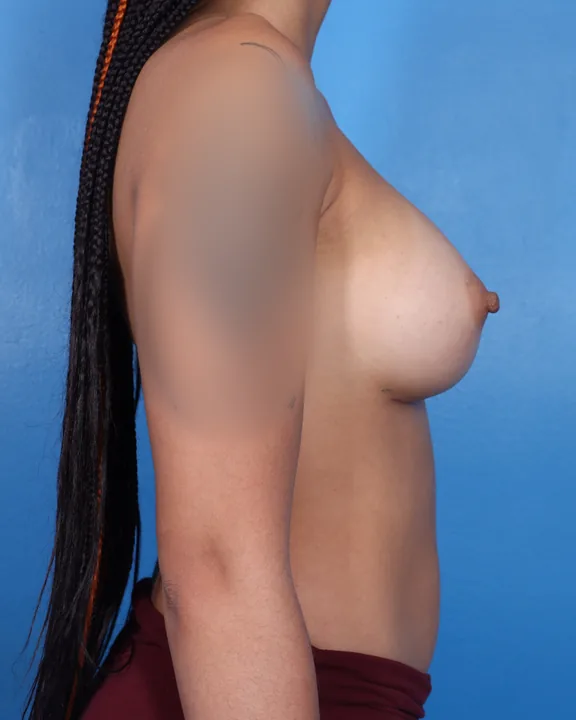
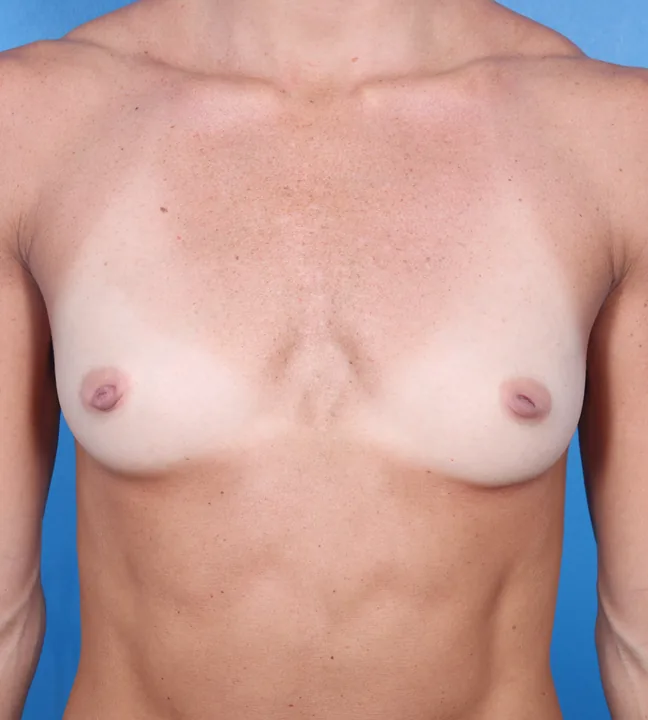
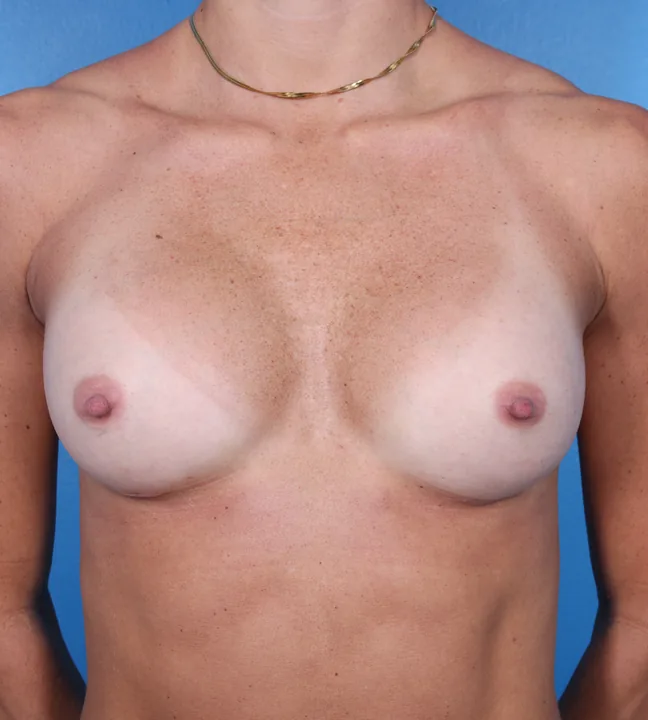
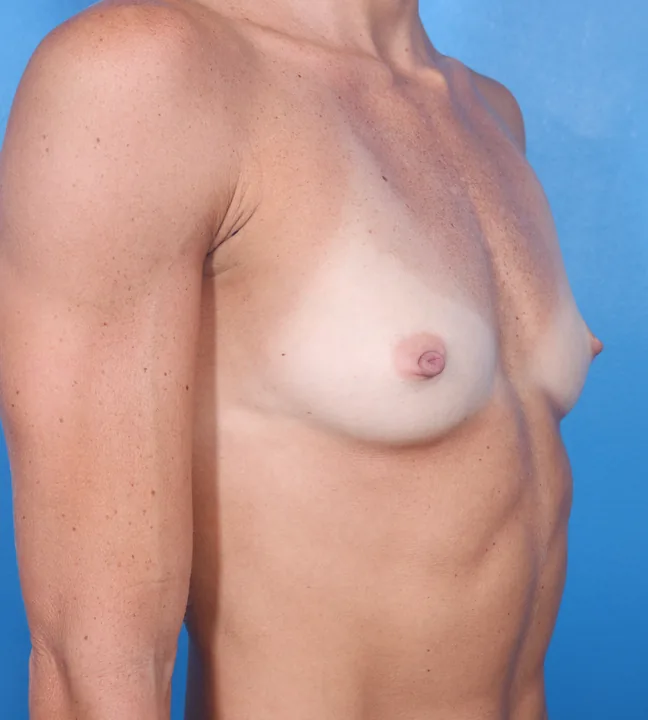
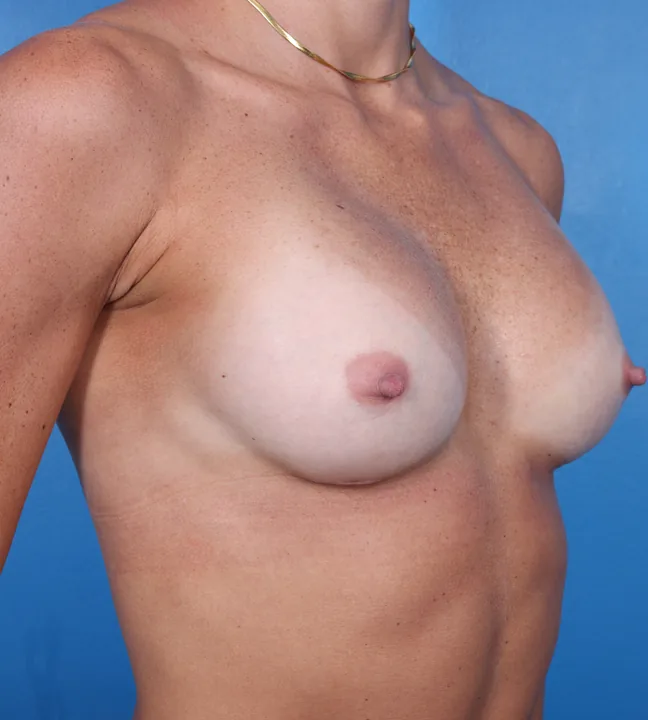
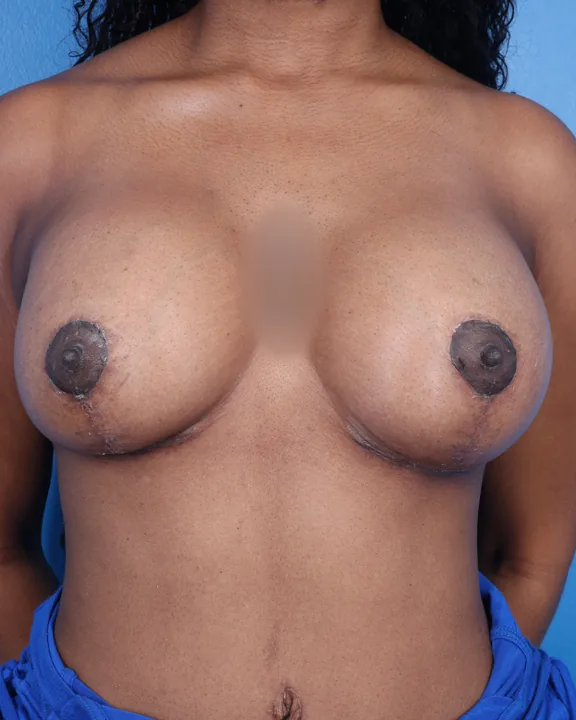
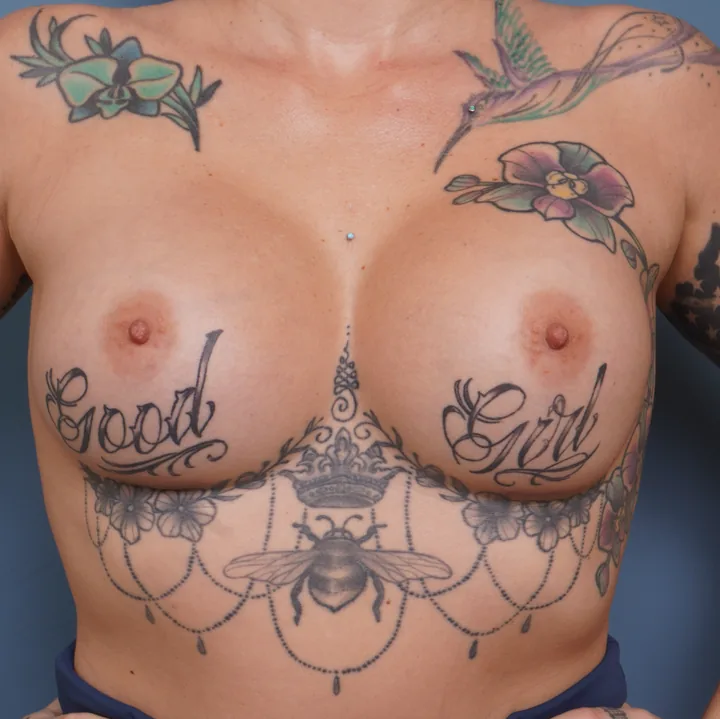
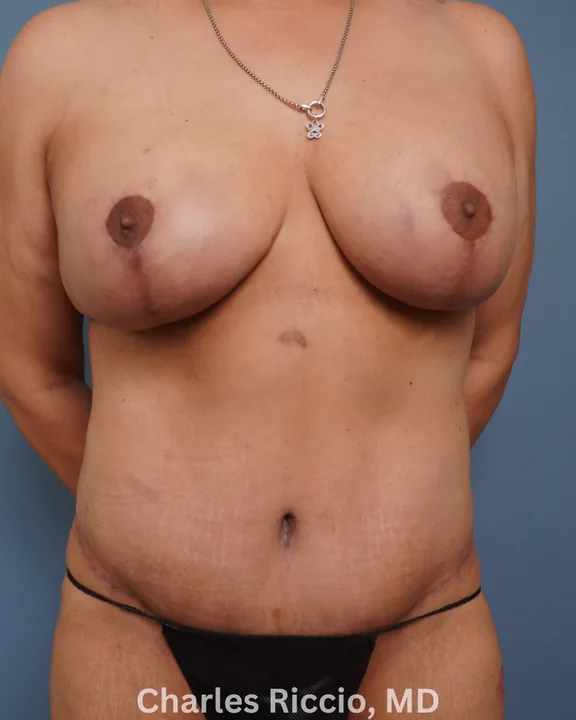
Dr. Riccio's own patients, shared with consent. Individual results vary.
Breast augmentation, silicone
Oblique
6 weeks afterBreast augmentation
Front
3 months afterBreast augmentation
Oblique
3 months afterBreast augmentation
Oblique
3 months afterBreast augmentation
Side
3 months afterBreast augmentation
Front
Breast augmentation
Oblique
Is it right for you?
Breast augmentation uses silicone gel or saline implants to add volume, improve upper-pole fullness and bring the breasts into proportion with the hips and shoulders. It is one of the most studied operations in plastic surgery, with ten-year follow-up data on the modern implants used today.[1][2]
The best results look like they belong to the patient. That depends far more on planning than on the implant itself: the width of the breast, the thickness of the tissue that will cover the implant, the position of the fold beneath the breast and the distance between the breasts all decide which implant will look natural on a given frame.
- You feel your breasts are small for your frame, or have lost volume after pregnancy, breastfeeding or weight loss
- One breast is noticeably smaller than the other
- You are in good general health, not pregnant or breastfeeding, and at a stable weight
- You do not smoke, or are willing to stop well before surgery
- Your breasts sit at a reasonable height; if the nipple points downward, a lift may be needed as well
Dr. Riccio's approach
Dr. Riccio starts with measurements, not catalogues: base width, tissue pinch thickness, nipple-to-fold distance and skin stretch. From those he narrows the choice to a small range of implants that suit your anatomy, then refines size and profile with you using sizers and photographs of real outcomes.
His residency at the University of Miami and an Aesthetic Society-endorsed fellowship gave him broad training in aesthetic breast surgery, and he has co-authored peer-reviewed work on protecting nipple sensation during breast operations.[4][5]
About Dr. Riccio1Incision
Most augmentations use a short incision hidden in the fold beneath the breast, which gives precise control of the pocket and keeps the scar out of sight.
2Pocket
The implant is placed partly beneath the chest muscle (dual plane) or above it, depending on how much natural tissue you have. In the Natrelle 10-year study, capsular contracture was less common with submuscular placement (15.7%) than subglandular placement (26.3%).[1]
3Implant
Smooth round silicone implants are used most often. Dr. Riccio never uses textured implants, because of their association with BIA-ALCL, a rare lymphoma of the scar capsule.[3]
4Closure
Layered sutures and a supportive garment. Most patients go home the same day.
Recovery
A typical course. Your own plan and timings are set at your consultation.
Days 1-3
Chest tightness and soreness, managed with a combination of non-opioid medication and rest. Short walks from day one.
Week 1
First follow-up visit. Many patients return to desk work and light daily activity.
Weeks 2-4
Swelling eases. No lifting, pushing or upper-body training. Surgical bra day and night.
Weeks 6-8
Gradual return to full exercise once cleared. Underwire bras usually allowed.
Months 3-6
Implants drop and soften into their final position; scars begin to fade.
Safety & evidence
Dr. Charles Riccio, MD, board-certified plastic surgeon. Updated
Long-term studies give honest numbers to plan around. In Allergan's 10-year core study, 94.2% of augmentation patients were satisfied with their implants, and 81.8% still had their original implants at ten years.[1] Mentor's 10-year study reported a 12.1% rate of significant capsular contracture and a 25.5% rate of any reoperation for primary augmentation.[2]
Implants are not lifetime devices. Possible issues include capsular contracture, rupture, implant malposition, changes in nipple sensation and the need for future surgery. Dr. Riccio reviews each of these with you, along with the current FDA guidance on breast implants and BIA-ALCL.[3]
Stopping smoking at least four weeks before surgery measurably lowers wound-healing problems.[6]
Swelling settles over the first weeks and the implants soften and drop over three to six months. The result is long-lasting, although breasts continue to age with time, gravity and weight change, and some patients choose a revision or lift years later.
Breast Augmentation questions
Both are FDA-approved. Most patients choose silicone gel because it feels more like natural breast tissue, particularly in thinner patients. Saline can be placed through a smaller incision and is filled during surgery. Dr. Riccio will explain which suits your tissue.
References
- 1.Spear SL, Murphy DK; Allergan Silicone Breast Implant U.S. Core Clinical Study Group. Natrelle round silicone breast implants: Core Study results at 10 years. Plastic and Reconstructive Surgery. 2014. PubMed 24867717
- 2.Caplin DA, Calobrace MB, Wixtrom RN, Estes MM, Canady JW. MemoryGel Breast Implants: Final Safety and Efficacy Results after 10 Years of Follow-Up. Plastic and Reconstructive Surgery. 2021. PubMed 33620918
- 3.Groth AK, Graf R. Breast Implant-Associated Anaplastic Large Cell Lymphoma (BIA-ALCL) and the Textured Breast Implant Crisis. Aesthetic Plastic Surgery. 2020. PubMed 31624894
- 4.Riccio CA, Zeiderman MR, Chowdhry S, et al.. Plastic Surgery of the Breast: Keeping the Nipple Sensitive. Eplasty. 2015. PubMed 26171100
- 5.Schulz S, Zeiderman MR, Gunn JS, Riccio CA, et al.. Safe Plastic Surgery of the Breast II: Saving Nipple Sensation. Eplasty. 2017. PubMed 29213346
- 6.Rinker B. The evils of nicotine: an evidence-based guide to smoking and plastic surgery. Annals of Plastic Surgery. 2013. PubMed 23542839
This page is general education, not medical advice. Whether a procedure suits you is decided in consultation.
Begin with a conversation.
A private, unhurried consultation with Dr. Riccio himself: your goals, an honest assessment, and a plan made for you alone.
- Location
- 4800 N. Federal Hwy, Suite C101Boca Raton, FL 33431
- Office hours
- Monday - Friday · 9 AM - 5 PM
- Telephone
- 561.406.4575